When choosing a new monitor or laptop, the display's aspect ratio profoundly impacts your daily experience. While 16:9 has been the dominant standard for years, the 16:10 aspect ratio has made a significant comeback, especially in professional devices. The core difference between aspect ratio 16 9 vs 16 10 boils down to screen real estate: 16:10 offers slightly more vertical space, which can be a game-changer for productivity, while 16:9 remains the universal standard for entertainment.
Ultimately, there isn't a single "best" option; the ideal choice depends entirely on your primary use case. If you're a heavy multitasker, coder, or document editor, that extra vertical room on a 16:10 screen might feel invaluable. However, if your world revolves around movies, gaming, and streaming, the ubiquity of 16:9 content could make it the more seamless experience. Let's break down the nuances to help you decide which display ratio truly fits your needs.
⚡ Quick Verdict:
- ✅ 16:9 for pure entertainment (movies, console gaming)
- ✅ 16:10 for productivity (coding, documents, web browsing)
- ⚠️ Both are excellent for general use, but 16:10 offers a slight edge for work.
- 👉 Key Factor: Content availability and your primary tasks dictate the best fit.
Understanding Aspect Ratios: 16:9 vs 16:10
An aspect ratio describes the proportional relationship between the width and height of a display. It's expressed as two numbers separated by a colon (e.g., 16:9 or 16:10). This ratio directly influences how content appears on your screen and how much workspace you have.
What is the difference between 16:9 and 16:10?
The fundamental difference between 16:9 and 16:10 lies in their vertical height relative to their width. For every 16 units of width:
- A 16:9 display has 9 units of height.
- A 16:10 display has 10 units of height.
This means a 16:10 display is slightly "taller" than a 16:9 display of the same width or diagonal size. While the numerical difference seems small, it translates into a noticeable increase in vertical screen real estate, measured in pixels.
For example, a common 16:9 resolution is 1920x1080 (Full HD). A comparable 16:10 resolution would be 1920x1200. Notice the extra 120 vertical pixels on the 16:10 screen. This extra space can make a significant difference in how much information you can see at once without scrolling, impacting everything from web browsing to spreadsheet editing.
Let's look at some common resolutions and their pixel counts to illustrate this:
| Aspect Ratio | Common Resolution | Total Pixels | Vertical Pixels | Pixel Density (approx. for 24-inch) |
|---|---|---|---|---|
| 16:9 | 1920 x 1080 (FHD) | 2,073,600 | 1080 | 92 PPI |
| 16:10 | 1920 x 1200 | 2,304,000 | 1200 | 96 PPI |
| 16:9 | 2560 x 1440 (QHD) | 3,686,400 | 1440 | 123 PPI |
| 16:10 | 2560 x 1600 | 4,096,000 | 1600 | 128 PPI |
| 16:9 | 3840 x 2160 (4K) | 8,294,400 | 2160 | 184 PPI |
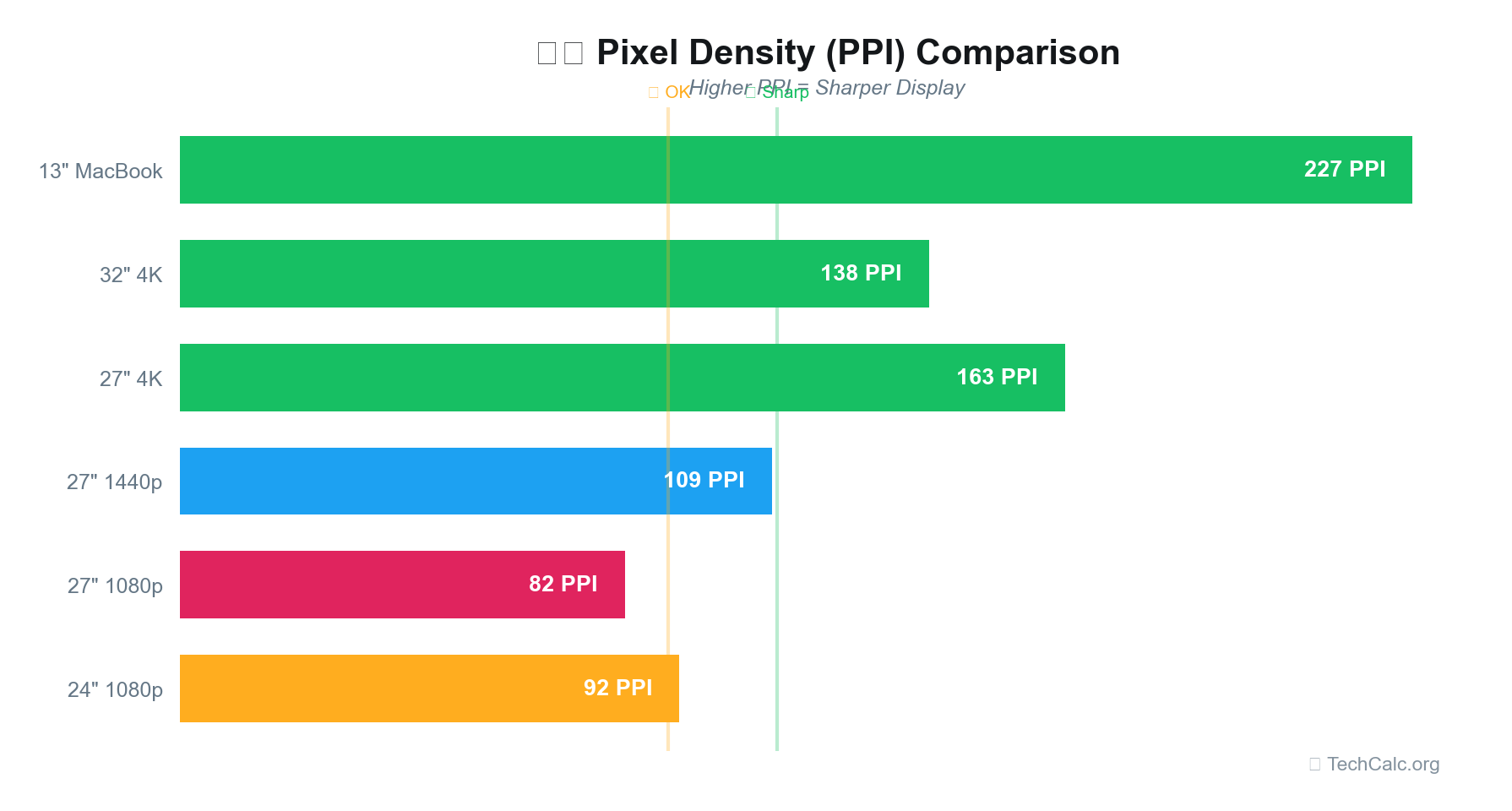
As you can see, for a given width, the 16:10 display consistently offers more vertical pixels. This extra pixel count also means a higher overall pixel density (PPI) for similar screen sizes, potentially leading to sharper images and text, which you can explore further with our PPI Calculator.
Why Did 16:9 Replace 16:10?
The shift from 16:10 to 16:9 as the mainstream standard in the mid-2000s was largely driven by the burgeoning high-definition television (HDTV) market and the entertainment industry.
Before 16:9 became ubiquitous, 4:3 was the standard for traditional CRT TVs and computer monitors. As widescreen content gained traction, manufacturers needed a new standard. While 16:10 was initially popular for desktop monitors due to its productivity benefits, 16:9 emerged as the victor primarily for these reasons:
- HDTV Standardization: The 16:9 aspect ratio was adopted as the universal standard for high-definition television broadcasts (720p, 1080i, 1080p). This meant that all HD movies, TV shows, and video games were produced and optimized for this ratio.
- Seamless Media Consumption: By making computer monitors match TV screens, consumers could watch movies and TV shows on their computers without the unsightly black bars (letterboxing) that would appear on 16:10 or 4:3 displays. This created a more immersive and consistent viewing experience across devices.
- Manufacturing Efficiency: Standardizing on a single aspect ratio simplified manufacturing processes and reduced production costs for display panels. Producing millions of identical 16:9 panels was more economical than maintaining multiple lines for different ratios.
- Consumer Preference (Initially): The "widescreen" look of 16:9 felt modern and cinematic compared to the squarer 4:3. While 16:10 offered more vertical space, the desire for an uncropped, full-screen movie experience often outweighed the productivity benefits for the average consumer.
This convergence of the entertainment industry's needs, manufacturing economics, and initial consumer preference solidified 16:9's position as the dominant aspect ratio for nearly two decades.
The Case for 16:9: Entertainment and Ubiquity
The 16:9 aspect ratio excels where media consumption is king. Its widespread adoption means almost all modern video content, from YouTube to Netflix, and most video games are designed to fit 16:9 screens perfectly.
Ideal for Entertainment
- Movies and TV Shows: The vast majority of films and television series are produced in 16:9 or a similar cinematic widescreen format. On a 16:9 monitor, you'll experience full-screen viewing without black bars, maximizing your immersion.
- Gaming: Most modern video games are optimized for 16:9 displays. This ensures that the game fills your screen correctly, and the user interface (UI) elements are positioned as intended by the developers. While some games support 16:10, you might occasionally encounter minor scaling issues or a slightly cropped field of view compared to 16:9.
- Streaming Content: Whether you're watching Twitch, YouTube, or any major streaming service, 16:9 is the default. This guarantees a seamless viewing experience every time.
Widespread Availability and Affordability
Because 16:9 has been the standard for so long, 16:9 monitors and laptops are incredibly common and often more affordable than their 16:10 counterparts. This makes them an accessible choice for most users. If you're building a budget-friendly setup or simply want a wide array of options, 16:9 offers the best selection.
The Resurgence of 16:10: Productivity and Workspace
Despite 16:9's dominance, 16:10 has seen a significant resurgence, particularly in premium laptops and professional monitors. This comeback is largely driven by a renewed focus on productivity and a better computing experience for tasks beyond pure entertainment.
Enhanced Productivity
The primary benefit of a 16:10 display is the extra vertical screen real estate. This might seem minor, but it translates into tangible advantages for many tasks:
- Document Editing: Whether you're writing reports, reviewing code, or working on spreadsheets, more vertical space means you can see more lines of text or rows of data without scrolling. This reduces eye strain and improves workflow.
- Web Browsing: Modern websites are often designed with vertical scrolling in mind. A 16:10 screen allows you to see more of a webpage at once, reducing the need to constantly scroll up and down.
- Coding and Development: Programmers greatly benefit from seeing more lines of code simultaneously. This improves readability and efficiency when working with large codebases.
- Graphic Design and Video Editing: While ultra-wide screens offer horizontal space, the extra vertical pixels on a 16:10 can be valuable for toolbars, timelines, and layers in creative applications, especially when combined with a second monitor.
- Multitasking: If you frequently work with two applications side-by-side, the added vertical room ensures both windows remain usable without feeling overly cramped.
Many premium laptops, including Apple's MacBook Pro line, have embraced 16:10 (or even taller ratios like 3:2) for these very reasons, recognizing that a significant portion of their user base prioritizes work over pure media consumption.
A More Balanced View
Some users find the 16:10 aspect ratio to feel more "natural" or balanced for general computing tasks. While 16:9 can sometimes feel overly wide, 16:10 strikes a pleasant balance between width and height, offering a more comfortable viewing experience for reading and working.
Why is 16:10 Not the Golden Ratio? Addressing a Common Myth
There's a persistent misconception that 16:10 is the "golden ratio" due to its pleasing proportions. Let's clarify this:
The Golden Ratio, often denoted by the Greek letter phi (Φ), is an irrational number approximately equal to 1.6180339887.... It's found in nature, art, and architecture, and is believed to be aesthetically pleasing.
- The ratio of 16:10 simplifies to 1.6:1.
- The Golden Ratio is approximately 1.618:1.
As you can see, 1.6:1 is very close to 1.618:1, but it is not the Golden Ratio. The difference is small, which likely contributes to the myth and why many find 16:10 displays aesthetically appealing and well-proportioned. While 16:10 isn't mathematically the Golden Ratio, its closeness to it might explain why it feels so "right" to many users for productivity and general use. It offers a slightly less aggressive widescreen feel than 16:9, which some prefer for sustained work.
Choosing Between Aspect Ratio 16 9 vs 16 10: What's Right for You?
The best aspect ratio for you depends heavily on your daily activities and priorities. Here's a breakdown to help you make an informed decision:
Choose 16:9 If:
- You primarily watch movies, TV shows, or stream video content. Most media is optimized for 16:9.
- You are a dedicated gamer. Most games are designed for 16:9, ensuring compatibility and optimal UI placement.
- You're on a tighter budget. 16:9 monitors and laptops are generally more abundant and affordable.
- You want maximum compatibility. You'll rarely encounter black bars or scaling issues with 16:9 content.
Choose 16:10 If:
- Your main tasks involve productivity. Coding, writing, document editing, spreadsheet work, and extensive web browsing benefit greatly from the extra vertical space.
- You value screen real estate for multitasking. More vertical pixels mean less scrolling and more content visible at once.
- You prefer a more balanced, less "stretched" feel for general computing. Many find 16:10 more comfortable for long work sessions.
- You are considering a premium laptop. Many high-end productivity laptops now feature 16:10 or even taller displays.
- You don't mind occasional black bars when watching 16:9 video content (though these are usually small and unobtrusive).
Consider Your Setup
Think about your entire computing setup. If you use multiple monitors, mixing aspect ratios can sometimes lead to minor inconsistencies, but it's rarely a deal-breaker. For single-monitor users, the choice becomes even more critical for your primary interaction.
You can also use tools like our PPI Calculator to compare the pixel density of different aspect ratios and resolutions on various screen sizes. This can help you understand how sharp text and images will appear, which is crucial for both work and entertainment.
Conclusion: The Evolving Landscape of Aspect Ratios
The debate between aspect ratio 16 9 vs 16 10 isn't about one being inherently "better" than the other, but rather about optimizing your screen for your specific needs. While 16:9 continues to dominate the entertainment sphere due to its historical adoption for HDTV, 16:10 has firmly re-established itself as a superior choice for productivity-focused users.
The extra vertical pixels offered by a 16:10 display can significantly enhance your workflow, making tasks like coding, writing, and browsing the web more efficient and comfortable. However, if gaming and media consumption are your top priorities, the widespread compatibility and immersive full-screen experience of 16:9 remain unmatched.
As display technology continues to evolve, we might even see wider adoption of even taller aspect ratios like 3:2 or even 4:3 in niche professional devices, further emphasizing the shift towards optimized vertical space for work. For now, understanding the distinct advantages of aspect ratio 16 9 vs 16 10 will empower you to make an informed decision that truly enhances your digital life in 2026 and beyond.